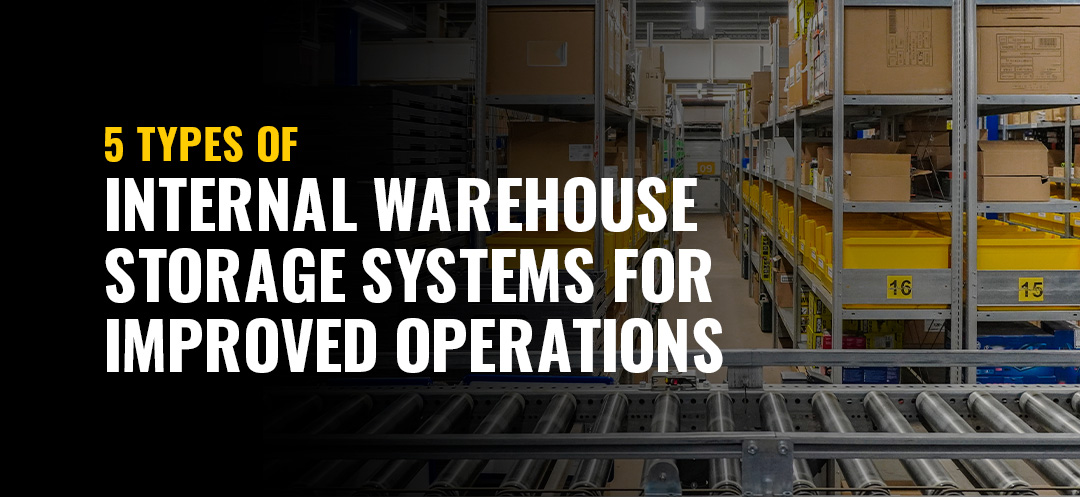
Running a warehouse is a constant balancing act — do more with less space, fewer resources and tighter timelines. Inefficient storage systems amplify these challenges, slowing down workflows and impacting your bottom line. Learn the most common types of internal warehouse storage systems to help you find the perfect fit for your facility.
Importance of Warehouse Storage Systems
A well-designed warehouse storage system is a foundation for safe, efficient and scalable operations. The right setup can help unlock the full potential of your facility so you can maximize every square foot and transform how your team works.
Improved Safety
With warehouse accidents on the rise, safety has become paramount. Proper storage systems can help reduce clutter, eliminate trip hazards and create clear pathways. The right solution may protect your workers, inventory and machinery.
Maximized Space
Whether you operate a small facility or manage a large distribution center, storage systems help you maximize your space. Solutions like multitier racking allow you to expand vertically and eliminate wasted aisle space.
Enhanced Organization
Imagine a warehouse where everything is in its place. With proper warehouse storage and clear labeling, your team would spend less time searching and more time doing. In this situation, inventory tracking would be effortless, product loss would be minimized, and workflows would be more efficient.
5 Types of Warehousing Storage Solutions
Five main types of warehouse storage systems can help you make the most of your space. Each option offers unique advantages, and understanding them can help you choose the most relevant combination for your business’s needs.
1. Static Shelving
Static steel shelving is a straightforward solution for organizing smaller items. These fixed units don’t move, making them stable and ideal for manual picking operations. You can use static shelving in parts rooms, maintenance areas and stockrooms where simplicity and reliability are essential.
Key applications and benefits of static shelving systems include:
- Organization: Steel shelving is perfect for organizing small- to medium-sized products picked by hand. They allow workers to locate and retrieve items without special warehouse storage equipment.
- Customizable: These systems are highly adjustable and can accommodate various product sizes.
- Stability: Steel shelves are stable, which can reduce the risk of tipping or shifting.
- Easy to install: This option is easy to install, making it a practical choice for environments that require a quick and easy setup.
2. Mezzanine Designs
If you want to expand your floor space, mezzanines allow you to take advantage of vertical space and increase your square footage without a full-scale building expansion. These freestanding platforms create a second level of usable space within your warehouse. They’re incredibly versatile — you can use this solution for storage, office space or assembly areas.
There are a few safety and compliance considerations for this route:
- Structural integrity: To ensure structural integrity and worker safety, your mezzanines must meet local building code requirements.
- Essential safety features: A compliant system typically includes guardrails, stairs and safety gates.
- Integrated design: Consider fire safety, lighting and access during the initial design and installation phases.
3. Pallet Racking
Pallet racking is a go-to solution for many high-volume operations. It’s one of the most versatile warehouse storage systems, built to handle palletized loads and integrate seamlessly with forklift operations.
These systems are divided into a few key areas:
- Selective or standard racking: This type provides direct access to every pallet, offering maximum flexibility. It is ideal for warehouses that store a variety of stock-keeping units (SKUs) with different turnover rates.
- Drive-in and drive-through racking: Drive-in racking uses a single entry and exit point. Drive-through racking allows access from both sides for improved product flow.
- Push-back racking: This system uses a set of nested carts or inclined rails to automatically push existing pallets back as new ones are loaded, ensuring efficient use of space.
- Pallet flow racking: Pallet flow racking moves pallets forward automatically as they’re picked, making it ideal for first-in, first-out (FIFO) inventory strategies.
4. Multitier Racking
Multitier racking offers a scalable way to build upward for high-density storage without increasing your footprint. These systems stack on multiple levels, often with integrated walkways or stairs, allowing workers to access items manually across different tiers. Multitier racking stores small parts, bins or cartons and is usually paired with conveyor belts or mezzanines for seamless picking.

Similar to mezzanine systems, multitier racking requires key safety and compliance considerations:
- The system must be engineered to support heavy loads and multiple operators.
- Proper lighting, access paths and safety barriers are essential.
- Fall protection and OSHA compliance must be included in the design.
5. Wire Partitions
You can create partitions with wire mesh. Wire partitions offer a secure, flexible way to create defined zones within a warehouse. Whether you need to protect tools, lock up high-value goods or prevent unauthorized access, this solution can help you achieve your goal.
Wire partitions offer key benefits for security and organization:
- Wire mesh design provides visibility and airflow while maintaining security.
- Modular panels make it easy to expand or reconfigure as your needs change.
- You can integrate locks, access control systems and signage for extra protection.
How to Choose the Right Commercial Warehousing and Storage Solutions
Selecting the best system requires a strategic approach that aligns with your specific goals, inventory storage systems and available space. Before investing in any solution, it’s essential to step back and evaluate your operation.
A few key considerations for strategic planning include:
- Product type: Carefully consider your products’ size, weight and handling requirements.
- Scalability: Evaluate how much flexibility you need and whether your system can scale as your business grows.
- Compliance: Ensure the option you choose meets safety and building code requirements.
- Throughput needs: Consider how frequently items are picked or replenished to optimize efficiency.
- Budget and return on investment (ROI): Think beyond upfront costs and consider long-term ROI.
Frequently Asked Questions
Get your pressing questions on warehouse storage systems answered.
1. How Do I Choose the Right Storage System for My Warehouse?
Start by evaluating your inventory type, picking methods, available space, throughput rates and future growth plans. Then, consult with a warehouse equipment expert who can help you meet your operational and safety needs.
2. What Are the Most Common Types of Warehouse Storage Systems?
The most common types of warehouse storage systems include static shelving, mezzanine units, pallet racking, multitier racking and wire partitions. Each serves a specific purpose based on inventory and space requirements.
3. Can I Optimize Warehouse Storage Solutions?
Yes, many systems are modular or can be tailored to your needs. You can adjust shelving height, racking depth, weight capacity, layout and safety features based on your facility’s layout and workflow.
Ready to Optimize Your Warehouse?
Warehouse operations can be complex, and choosing the right storage system isn’t always easy, especially when juggling space constraints, safety rules and changing demand. Finding the right solutions and personalized guidance can help make the process smoother and more efficient.
Gregory Poole Lift Systems offers a comprehensive range of warehouse equipment and technology solutions to meet your needs. From adaptable shelving and racking to secure wire partitions and mezzanine solutions, our experts are ready to guide you every step of the way. Contact us today and take the first step toward a safer, more efficient operation.